Google Chrome is the world's most-used web browser, with a 69.39% share of global users as of September 2026. It's easy to install and highly customizable, with a huge library of extensions and real-time sync across your devices. Its built-in DevTools also make it a favorite for web developers. In our tests, it performed strongly on JavaScript-heavy tasks, though it can use a lot of RAM.
Google Chrome is one of the most-used web browsers today. According to StatCounter GlobalStats, it’s currently used by 69.39% of total browser users worldwide. It kept this position since 2020 through today (September 2026, the date we are reviewing this software).
Even in our office, all computers use this browser for research, development, or general browsing, and I've used it constantly since 2019.
In a hurry? Take a glance of this review
Interface: User-friendly, and Google is constantly making it more useful day by day.
Performance: Used a noticeable amount of RAM on both macOS and Windows; Speedometer 3.1 scores were average on Mac (39.6) and low on Windows (22.2).
Sync: Has a real-time synchronization feature, which helps you to easily move between devices.
Developer tools: Great for developers, as its name suggests. So many useful features that boost the development journey.
Privacy: A weaker area in our review. It failed several tests on PrivacyTests.org that its competitor passed.
Verdict: A safe, capable default for most people. However, power users who care about privacy or raw speed have reasons to look elsewhere.
How is the interface of Google Chrome?
Over the years, I have used Google Chrome, and following it, it has been updating its interface step by step to improve its user-friendliness. From the New Tab page to simplifying its Settings interface, it brings some kind of interface improvements over time.
Installing Interface
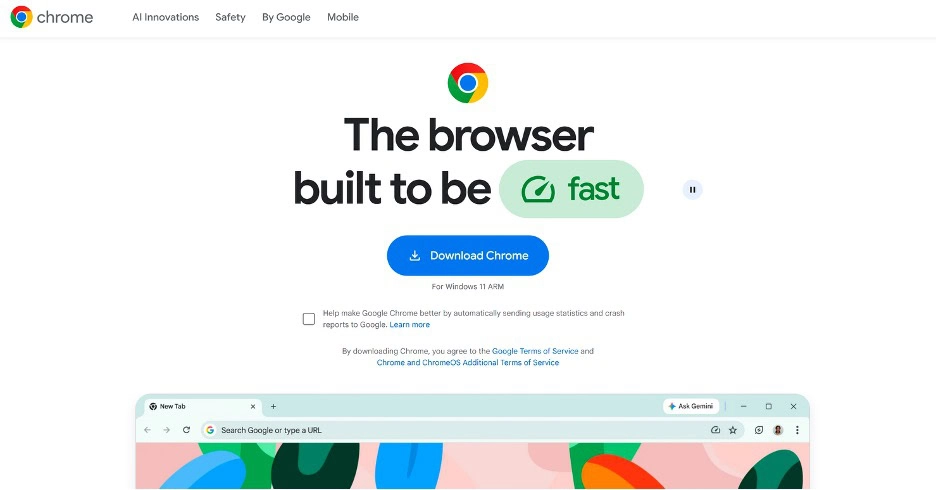
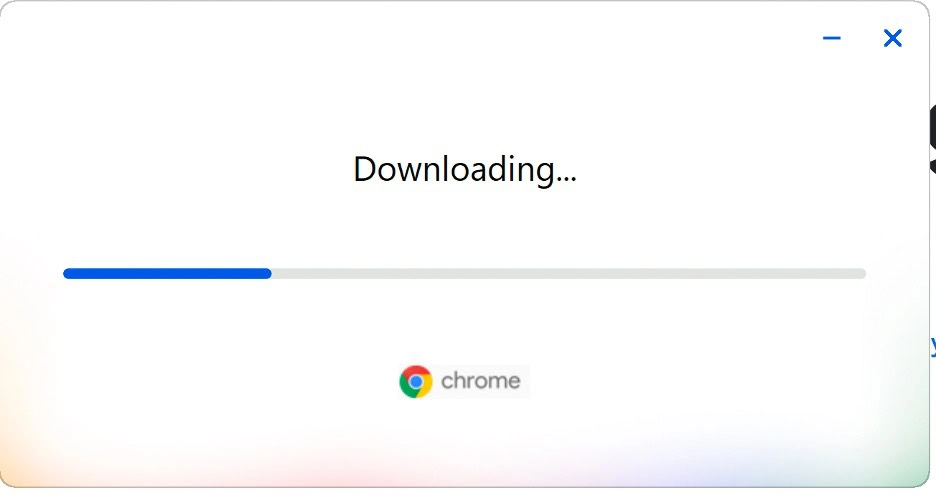
The installation process feels almost the same to me as it did in 2019. It’s as simple as just running the installation file, and it’s done on its own. It will install Google Chrome in the default location on your PC (Mac, Windows, and Linux) with the default settings. So, you don’t even need to worry about picking the wrong customization.
However, some advanced users may feel the customization options are limited. Sometimes we don’t want to install the software in the default location and might prefer a different drive to keep the main disk clean.
Browsing Interface
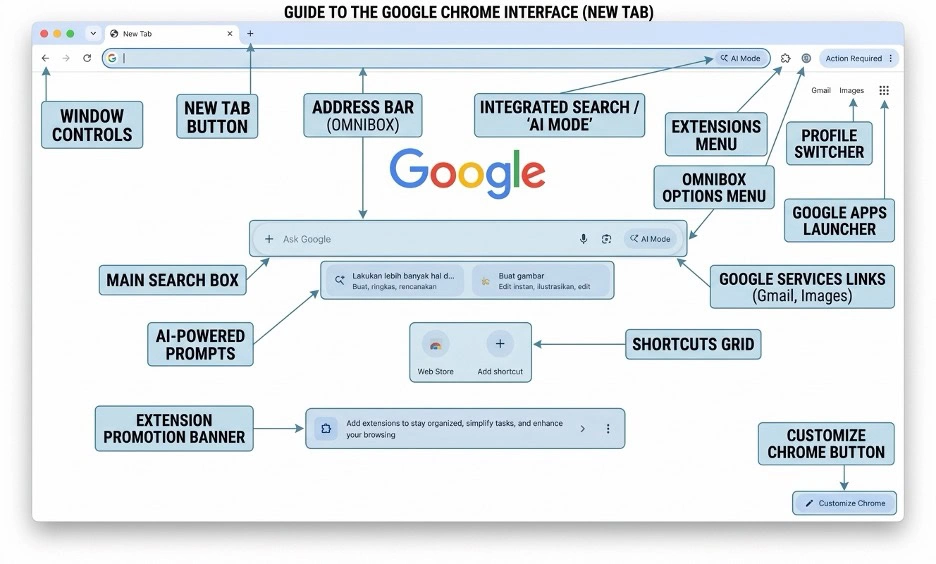
Google Chrome has a clean and minimal interface when you first open it. You will find these things on the interface:
Window Controls: You can use the Back/Forward icon to navigate and also use the Reload button to reload the page.
New Tab Button: To add new tabs for doing multitasking.
Address Bar: This one is also called OmniBox. Here you can search for any website or also directly ask AI using the AI Mode.
Extensions Menu: Using this one, you can see all your installed Extensions and also manage them, like pinning an extension, removing an extension, or navigating to its settings.
Profile Switcher: Here you can switch between your Chrome Profiles.
Main Search Box: Just like the address bar, you can directly search for anything on Google using it. Also, it has some extra features compared to the Address Bar:
Voice Search
Reverse Image Search
AI Search
Shortcuts Grid: Google Chrome generally trains itself by analyzing your behavior and adds your most visited sites here automatically so that you can quickly navigate to your favorite sites. You can also customize it, such as removing or adding sites here.
Extension Promotion Banner: From here, you can directly visit the Google Chrome Web Store to search and look for your desired extensions and install it on your browser.
Customize Chrome Button: Using this button, you can customize your Google Chrome’s appearance.
Customizing Interface
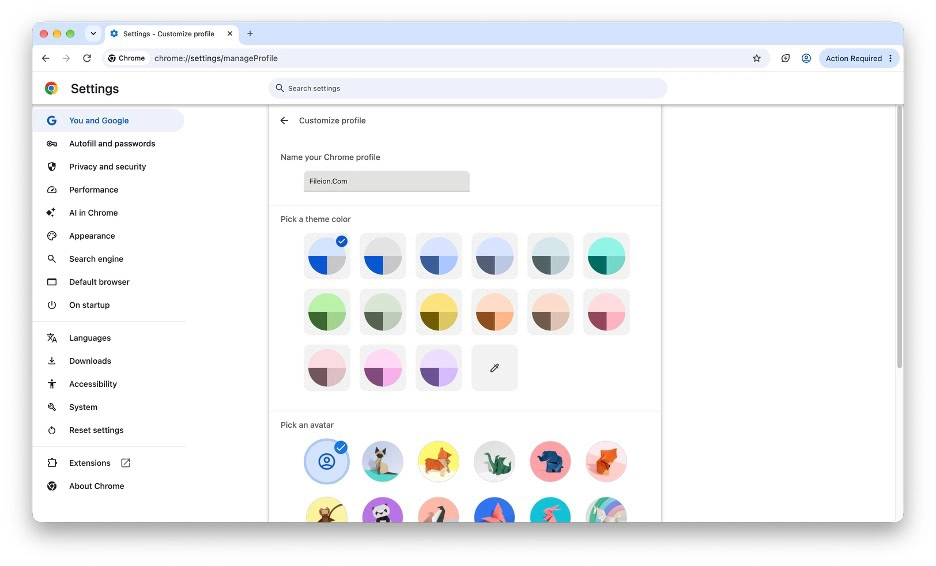
Unlike some other browsers, Chrome also provides you with the option to change the color scheme of your browser. To do it, click on the user icon, which is located at the top right of your browser window, and then just click on “Customize Profile”.
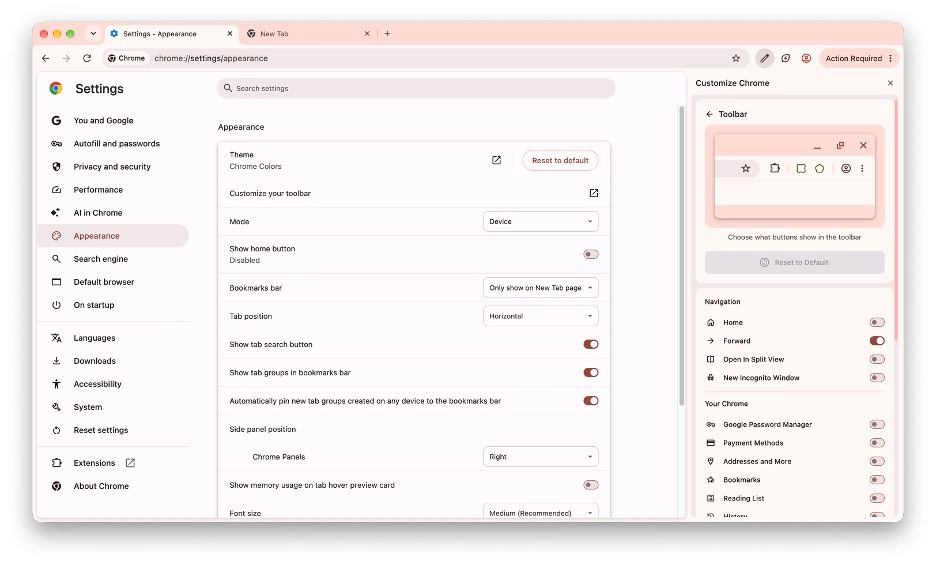
From there, you can customize or change your Chrome Profile Name, change the theme primary color scheme, and also your profile avatar. Not only that, this browser gives you more opportunities for customization. You just need to visit the “Appearance” section of the Chrome Settings.
This section allows you to customize things like Themes, Toolbar, Theme mode (Dark or Light), Bookmarks bar, Font size, Default Page zoom, and so many other things. Even from the “Customize Chrome” button, you can change the background of the “New Tab” window. It allows you to use your own image, or you can just directly use one from the Chrome Web Store, which currently has more than 79,051 themes (as of September 2026), according to the report of Chrome Stats.
Using Extensions to extend its features
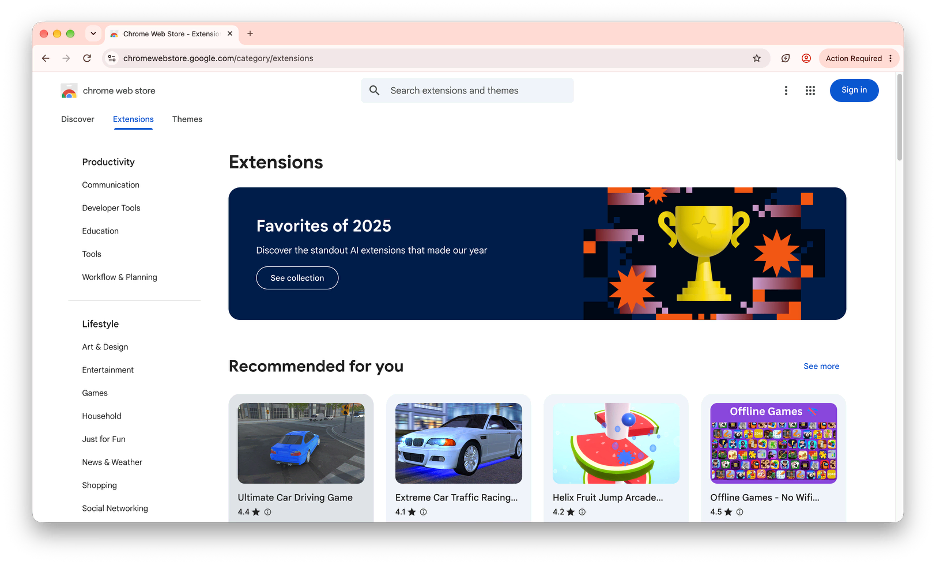
Besides Appearance, this browser also has a vast library of extensions that can even customize its features and functionalities. According to the report of Chrome-Stats, currently there are about 273,329 Chrome extensions available as of September 2026.
Installing an extension is also simple. You just need to visit the Chrome Web Store to search for extensions and click on install.
The Chrome Web Store is also organized well. It has separated each extension into its suitable category, like productivity and lifestyle. Under these categories, you can also find many subcategories for more specific searches.
I also use some of those extensions to simplify my browsing life. Like using an ad blocker to block unnecessary ads, an auto-refresher, enabling copy-paste, Google Translate, and so on. These extensions really help with my day-to-day browsing.
So without a doubt, having a vast selection of extensions really creates many possibilities for customization and improves the way you use your browser.
Performance, Speed, Memory and CPU usage
To test Google Chrome’s performance, we used both Windows and Mac. Here’s the configuration of our testing devices:
While doing these tests, we closed all other applications and kept only the browser running. We tested the latest version of Google Chrome as of September 2026 (version 154.0.8037.58). All extensions were disabled, and the tests were performed using a freshly installed Chrome setup.
Resource usage
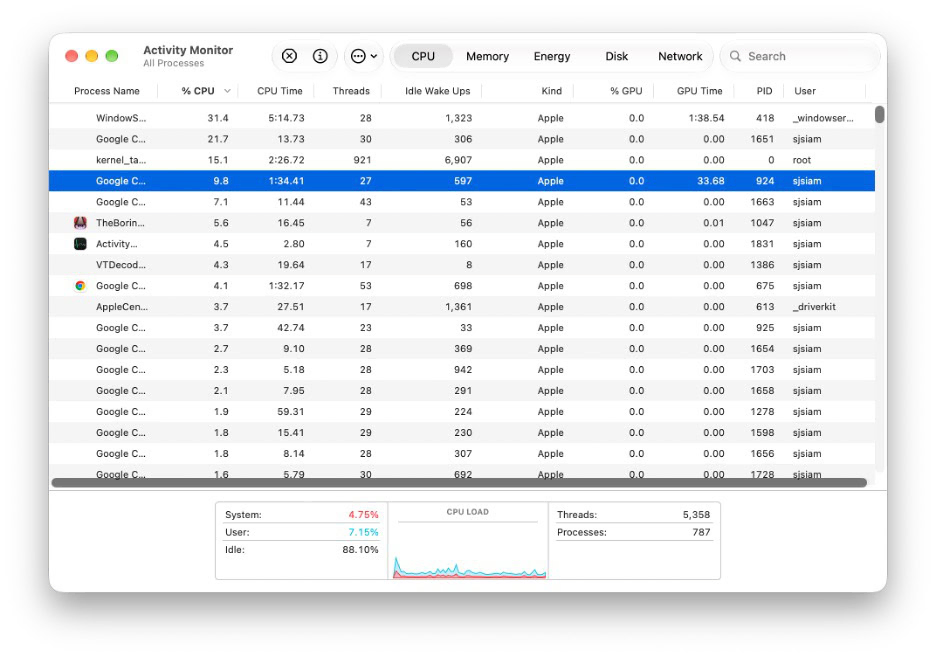
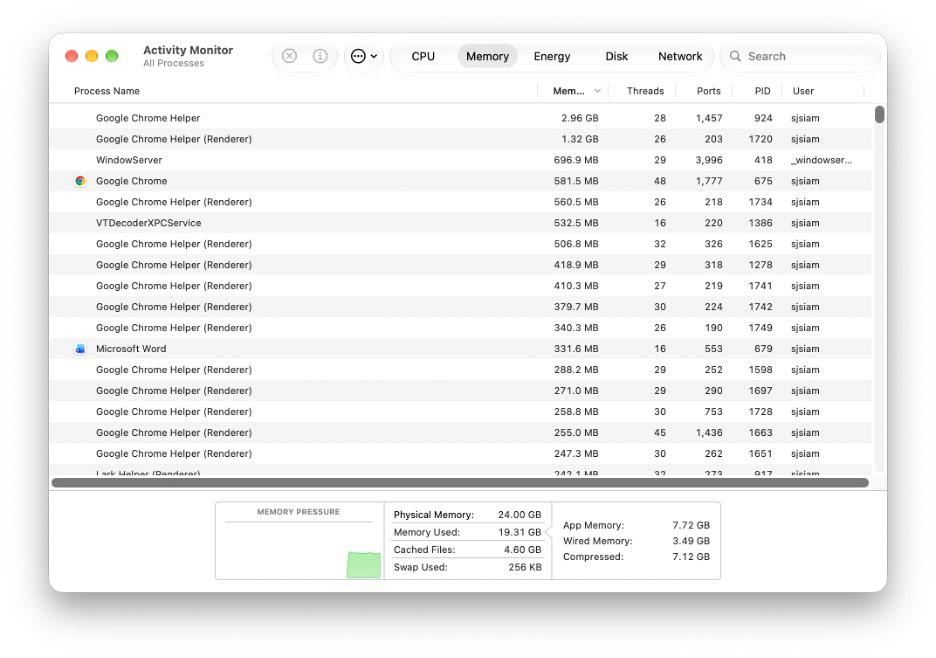
For this test, we tried to run 20 tabs with a mix of different YouTube videos and different online games (10 tabs of each) on both of our devices. Also, hardware acceleration was enabled, and memory saver was disabled.
On macOS, we saw that RAM usage was about 8/9+GB and 10%-20% of CPU usage. This data shows us that Google Chrome is really a RAM-hungry browser. So, if you are running a device that has low RAM, we recommend that you use features like Memory Saver and Energy Saver. This will help you a lot to increase your browsing performance. However, turning on this feature may result in limitations on some visual effects, smooth scrolling, and background activity.
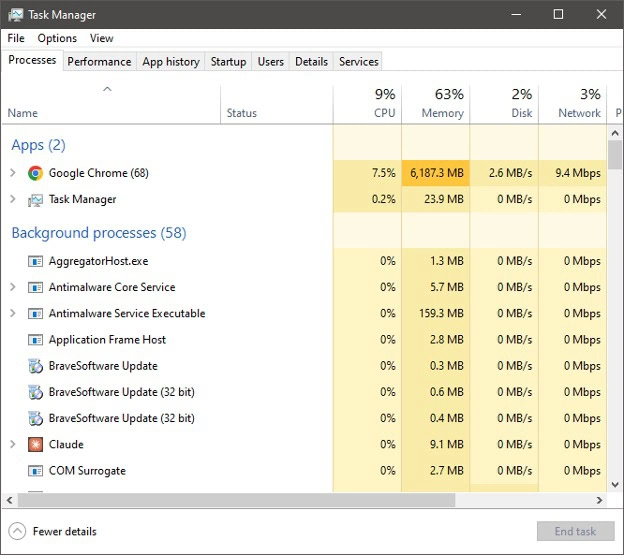
On Windows OS, Google Chrome was taking about 6GB of memory (38% of total RAM) and 7.5% of CPU usage during our test. Even on this OS, Chrome is really used a lot of RAM, but less than on macOS.
Based on the test results, Chrome for Mac is more resource-heavy than Chrome for Windows.
Speedometer 3.1 Test
After the resource usage test, we ran a Speedometer 3.1 test, which is a well-known browser benchmarking tool. In this test, a higher score means better performance.
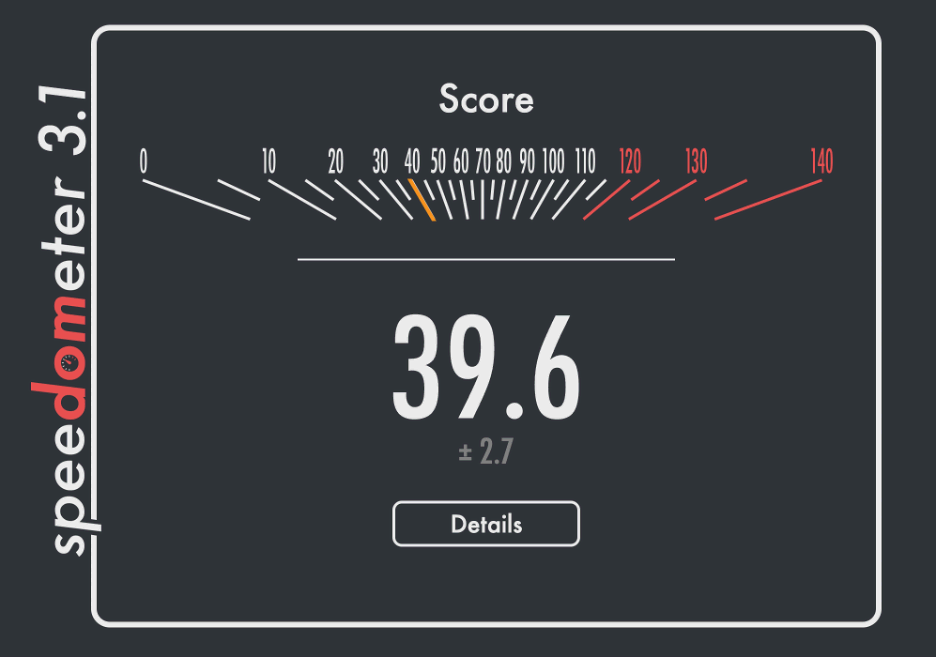
On Google Chrome on macOS, the test result is 39.6, which is roughly average. So, we can say that according to the Speedometer, this browser is neither too fast nor too slow.
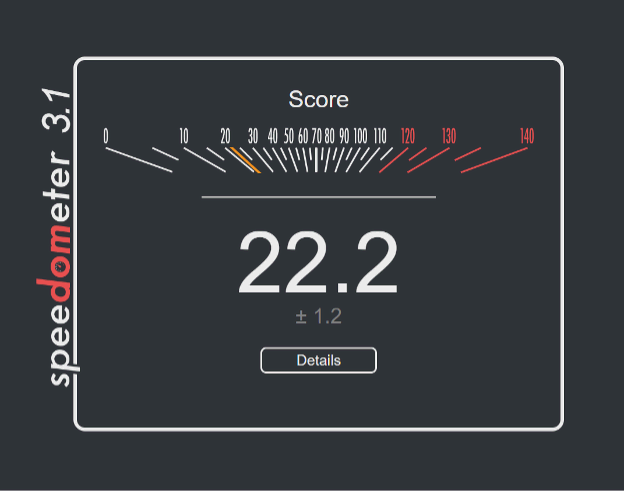
While testing the resource usage, we have seen that Google Chrome takes fewer resources on Windows. But when testing it on Speedometer in Windows, we saw a completely different story. It scored only 22.2, which is relatively low.
Cross-device ecosystem and Synchronization
One of my favorite features of this browser is its seamless synchronization system. It helps me a lot in saving time.
Let’s say you move to a new PC, buy a new laptop, or reset your device. After installing Chrome, you can just log in to your account, and all the extensions and data will automatically transfer to your newly installed Chrome. You don’t need to install any extensions manually, and even the settings are pulled from the account data.
For a real-time example, I have recently bought a new laptop. My old one was a Windows laptop, and the new one is a MacBook. Even though they run different operating systems, Chrome was able to merge everything without a hitch, and I could start to use my browser like I was using my old device, but with more speed. No time wasted, no setup stress, nothing to remember about which extensions or settings I had applied before.
Furthermore, it also support PC to mobile sync. Let’s say you are using your PC and then switch to your phone. You can just check your history and pick up right from where you left off on your PC. It syncs across all your devices in real time.
How does it support developers?
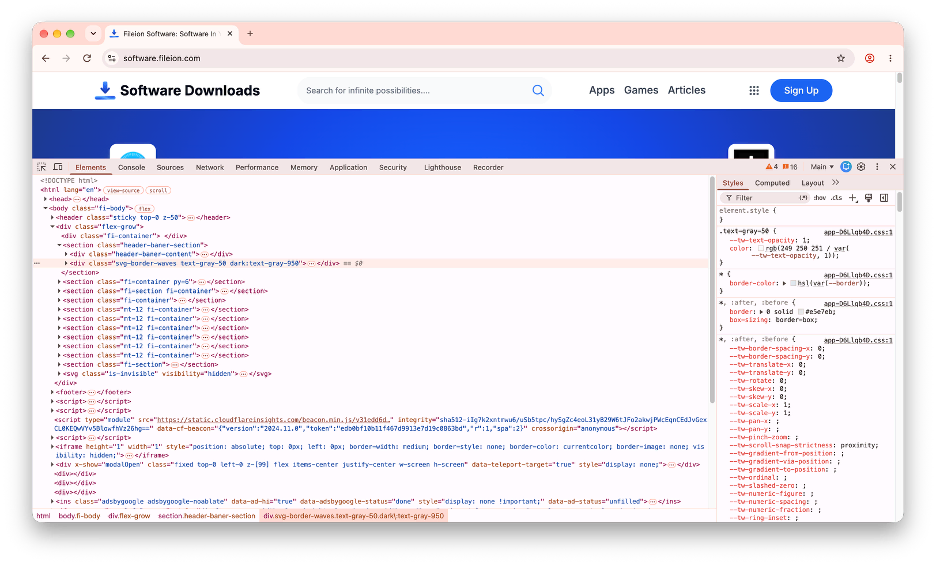
As a Web Developer myself, I use Google Chrome a lot for debugging using its “Developer Tools”. It’s really awesome and really helps a lot with HTML debugging, real-time CSS modification, and also running scripts in the console to check a site’s security.
Also, when working on a busy website, sometimes the website successfully fetches the data, but because of a slow network or server-side issue, the data doesn’t show on the screen. In these cases, I can just look at the Network Tab of Chrome DevTools and get the fetched data from there and continue my work as I was doing.
Chrome DevTools also supports checking real-time data like cookies and sessions, checking website performance, debugging slow website reasons, taking full-page screenshots, memory usage by the website, application details, and more. You can read more about Chrome DevTools from its official documentation.
How Safe Is Google Chrome?
Google Chrome provides you with several built-in security features, including Safety Check, Phishing Protection, Sandboxing, Site Isolation, Advanced Site Permissions, and much more.
But according to the report from PrivacyTest.org, Google Chrome fails in several categories where its competing browsers performed differently.
Though it has some privacy controversy, I loved its password manager. When you save a password in it, it gets synced to your all devices with it. Chrome also automatically checks any password you save against known data breaches, so if one of your passwords has been compromised, you'll know right away.
Anyway, you can always use extensions from the Chrome Web Store to increase your privacy protection and security level.
Comparing it with its competitors
Chrome vs Ray Browser vs Opera GX
We have benchmarked Google Chrome with two of its competitors, Ray Browser and Opera GX; however, on a different test machine than before.
Note: These results come from a separate test session using different hardware and testing conditions from the Windows and Mac performance tests above. Therefore, the scores from the two sections should not be directly compared.
Test Machine Details:
OS: Windows 11 Pro
CPU: i9 13900K
RAM: 32GB
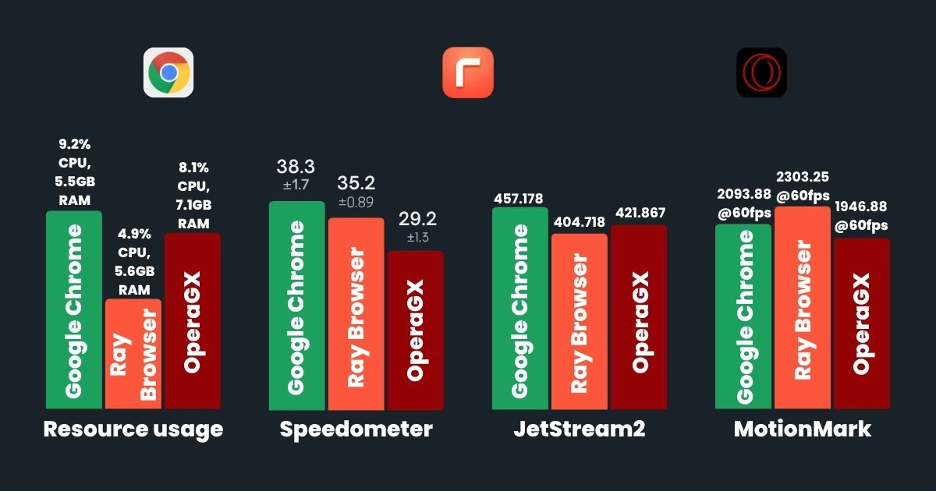
You can see the result in the chart below:
As you can see, in resource usage, Chrome was actually the heaviest on CPU (9.2%, versus 4.9% for Ray Browser and 8.1% for Opera GX), though RAM usage across all three stayed in a similar 5.5–7.1GB band.
But once we moved to raw performance, Chrome pulled ahead: it topped Speedometer with a score of 38.3 (Ray Browser scored 35.2, Opera GX 29.2) and led JetStream2 too, at 457.178 versus Ray Browser's 404.718 and Opera GX's 421.867.
The one benchmark where Chrome came up short was MotionMark, where Ray Browser's 2303.25 beat Chrome's 2093.88. Though Chrome still comfortably outpaced Opera GX's 1946.88 there.
So, my honest takeaway is something like a split decision. Google Chrome isn't the leanest on CPU, and Ray Browser has a real edge in animation smoothness, but Chrome is the strongest of the three on general JavaScript and web-app performance.
Chrome vs Firefox vs Brave
After the previous comparison, we have tested Google head-to-head with its closest competitors, Firefox and Brave Browser.
For this comparison, we have used:
Model: MacBook Pro M5 Pro
CPU/GPU: 15core/16core
RAM: 24GB
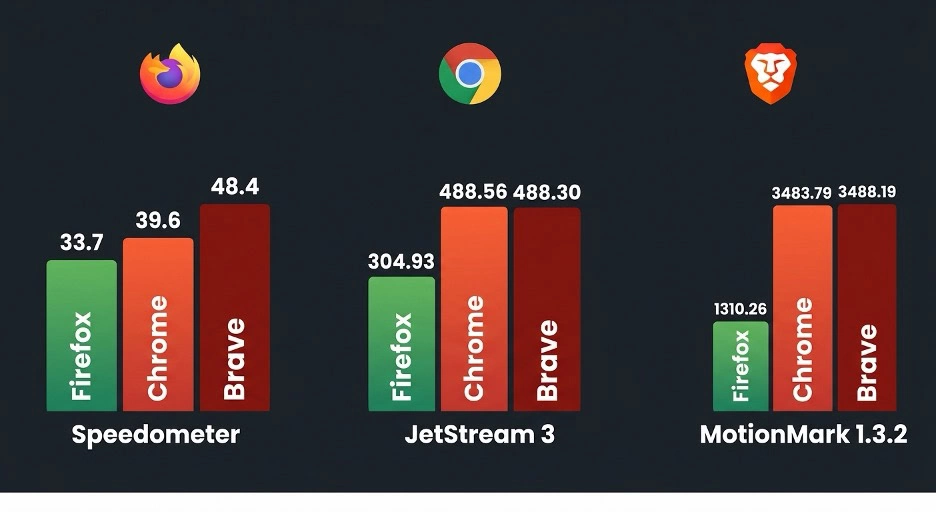
In Speedometer, Chrome scored 39.6, placing it between Firefox at 33.7 and Brave at 48.4. This means Brave performed better in this particular test, while Chrome still scored higher than Firefox.
The results were different in JetStream 3. Chrome scored 488.56, almost identical to Brave's 488.30, while Firefox scored 304.93. So, in this test, Chrome and Brave delivered very similar JavaScript and WebAssembly performance.
Finally, in MotionMark 1.3.2, Chrome scored 3483.79, while Brave scored 3488.19 and Firefox scored 1310.26. Chrome and Brave were again extremely close, with Brave having only a small lead, while Firefox scored considerably lower in this particular test.
Basically, Brave comes out slightly ahead overall, but Chrome isn't far off and actually holds its own on JetStream. Firefox just doesn't keep pace with either of them in this round.
To whom we are recommending it
Google Chrome is one of the most widely used web browsers. Because of its broad range of features, it makes it suitable for users across different professions. However, if you have privacy concerns and want to have built-in features like a VPN and an ad blocker, and don’t want to use extensions for these, then you can switch to Brave Browser, which passed most of the privacy tests on PrivacyTest.org.
Here you will find all the latest tips and tricks about Google Chrome. Also you will get many solution of problems which you may face while using this app.


-p6UL3AcG.jpg?q=100&w=48&s=e57938d467dcdeea201142bd05592d6d)
-p6UL3AcG.jpg?w=70&s=b80e074110e7733cc90ee7e21579c02e)
-p6UL3AcG.jpg?q=100&w=70&s=e1e40ff373cde0719d253e4c908ba38b)




teshom Tefera